how brass cuts on fibre.
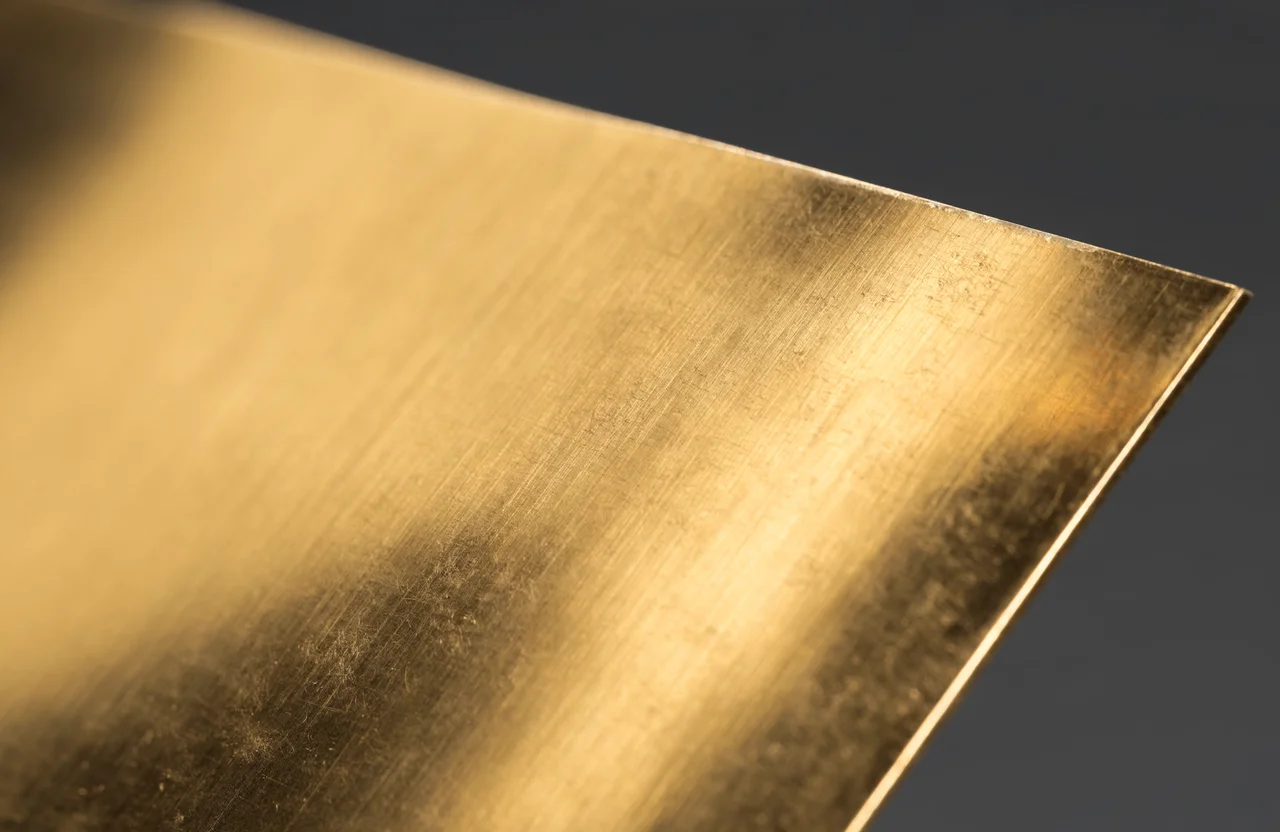
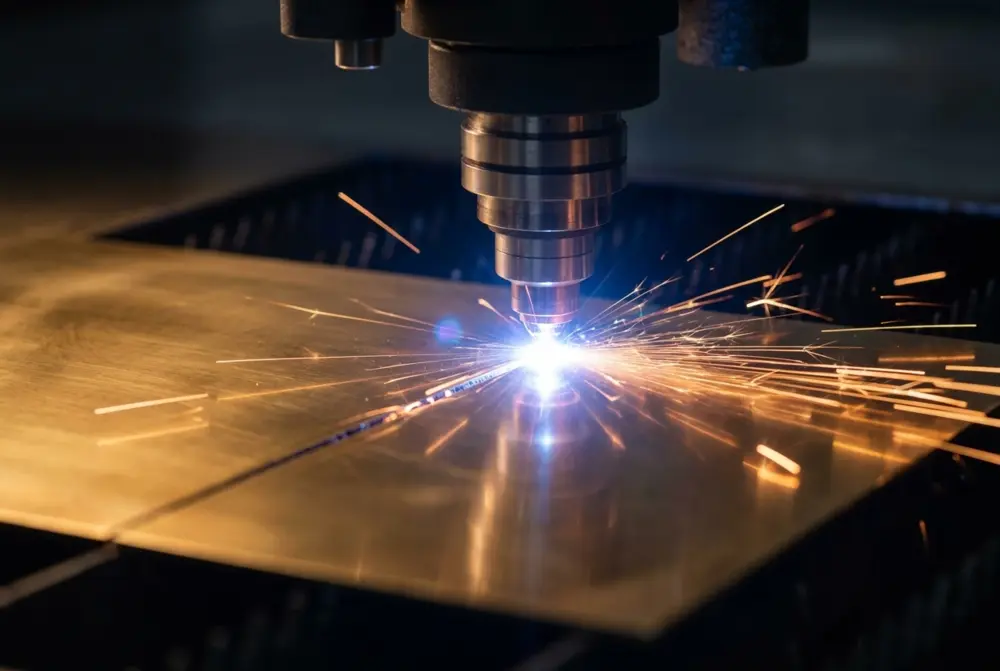
Brass is a reflective metal, and that reflectivity is why many older CO2 machines cannot cut it - the beam bounces rather than couples. Fibre sources work at a wavelength brass absorbs, so a 3kW fibre laser cuts it cleanly to 6 mm, with a kerf from 0.15 mm and crisp detail on fine work.
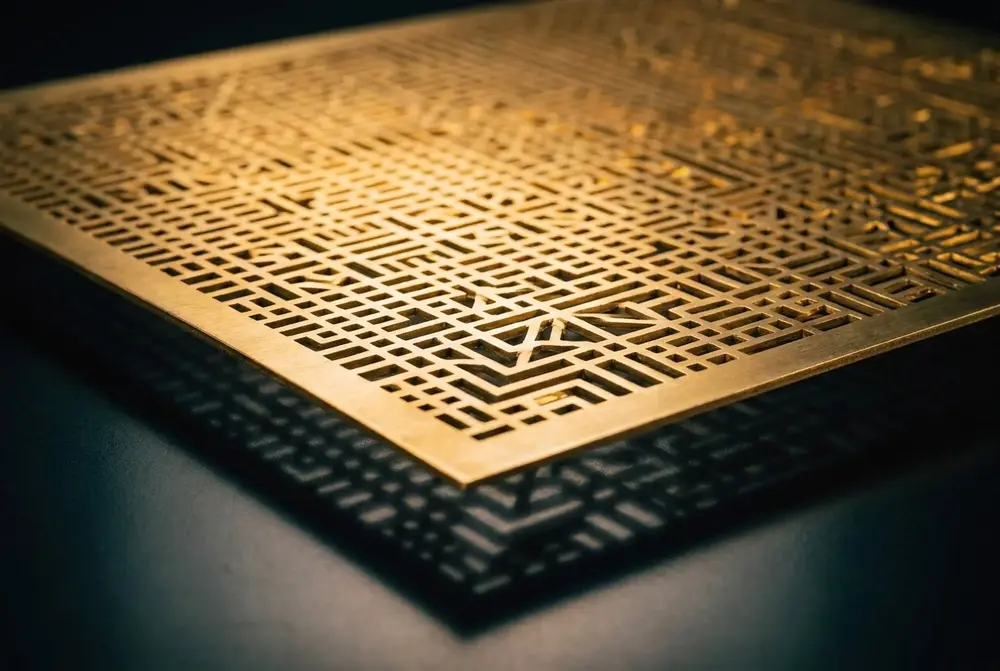
That makes decorative and precision brass profiling practical as a routine job rather than a special request.
what brass gets specified for.
Brass is commonly specified for decorative and architectural work - signage, trim, inlays and display pieces - as well as electrical components, instrument parts and low-friction mechanical details. It solders, machines and polishes well after cutting, and its finish makes it the usual choice wherever the part is on show.
Got a brass piece drawn? Upload the file and the price comes back within one working day.
upload your filesfinished on the same floor.
Deburr, fold and powder coat all happen in house, so brass parts leave ready to fit rather than ready for more work. Material certification and traceability are available on request.
Free-issue material is welcome - if you already hold the sheet, we will cut it. Send a DXF, DWG or STEP and we quote within one working day; if all you have is a PDF or a sketch, simple profiles can be redrawn, with any redraw time agreed before it is added to the price.
brass, the usual questions.
What thickness of brass can you laser cut?
From 0.3 mm up to 6 mm, on sheet up to 3 × 1.5 m. If your part sits outside that range, ask anyway - we will tell you straight if it is not one for us.
Can you supply the brass?
Yes. We source brass through our network of suppliers, and free-issue material is welcome too - if you already hold the sheet, we will cut that. Tell us the grade and thickness and we take it from there.
What tolerance do you hold on brass?
Plus or minus 0.1 mm as standard, held across the full 3 × 1.5 m bed. If a feature needs tighter, flag it on the drawing and we confirm before cutting.